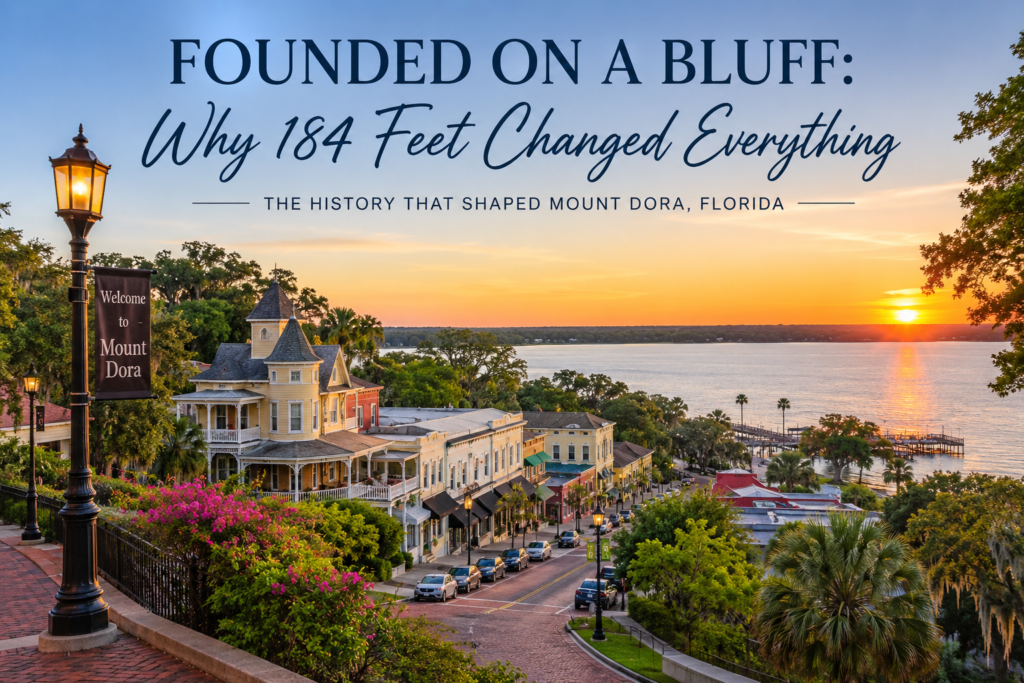
Most Florida towns sell you on beachfront. Mount Dora sells you on altitude. At 184 feet above sea level, it’s one of the highest points in peninsular Florida, and that “mount” shaped the whole town.
Settlers David Simpson, John P. Donnelly, and Ross C. Tremain platted the city in 1880. They picked the bluff for two reasons: citrus and comfort. The slope let cold air drain away on winter nights, protecting orange groves from freezes that wiped out lower farms. It also meant constant breezes off Lake Dora. Before air conditioning, that was the difference between a miserable summer and a livable one.
Wealthy northerners figured it out fast. By 1883 the Lakeside Inn opened, advertising “high ground and pure air” to people escaping yellow fever outbreaks and brutal winters. Steamboats from Jacksonville docked 50 yards from the hotel lobby. Guests stepped off, checked in, and sat on the veranda watching the same sunset you can see today.
The name honors Dora Ann Drawdy, an early settler who befriended surveyors in 1846. They named the lake after her, and the town took the lake’s name. She never saw the city, but her name is now on street signs, scholarships, and the annual Dora Awards.
Walk Donnelly Street and the bluff still runs the show. Buildings step down toward the water, so almost every block has a lake view. Porches face west for sunset. During the 2004 hurricanes, downtown stayed dry while nearby low areas flooded. That quirk of geography explains the architecture, the economy, and why locals still give directions by saying “we’re up on the hill.”
Local Tip: Stand at the corner of Donnelly and 5th at golden hour. The light hits the brick streets and you’ll understand why photographers move here.